November 20, 2025
From the Vault: “Herreshoff Manufacturing Company: The Irresolute Years, 1915-1925” by Llewellyn Howland III
A white whale of an article surfaces after decades of fruitless searching...
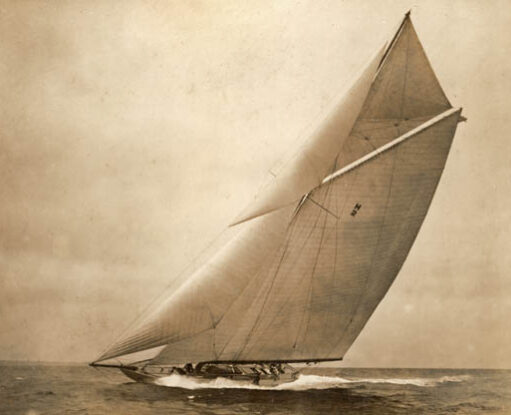
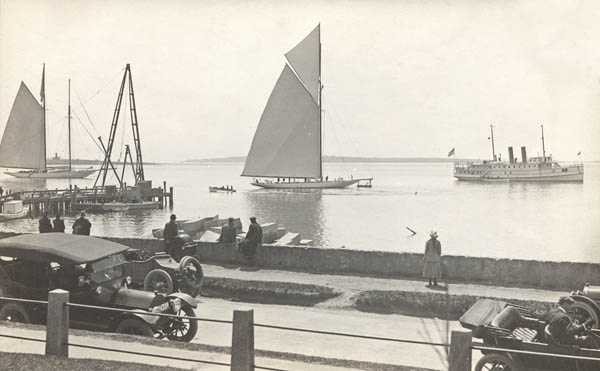
Rumors of the existence of this paper by the late yachting historian and writer Llewellyn Howland III (1937-2019) have circulated for years. But though we scoured the archive and curatorial files high and low, never was a copy to be found in Bristol, and hope was nearly lost... until this year, when the attached scan mysteriously appeared in an anonymous manilla envelope on a research trip to remotest Maine. We can't reveal our sources, but are delighted to be able to share this fantastic piece of writing with you today in draft form after a decades-long hunt.
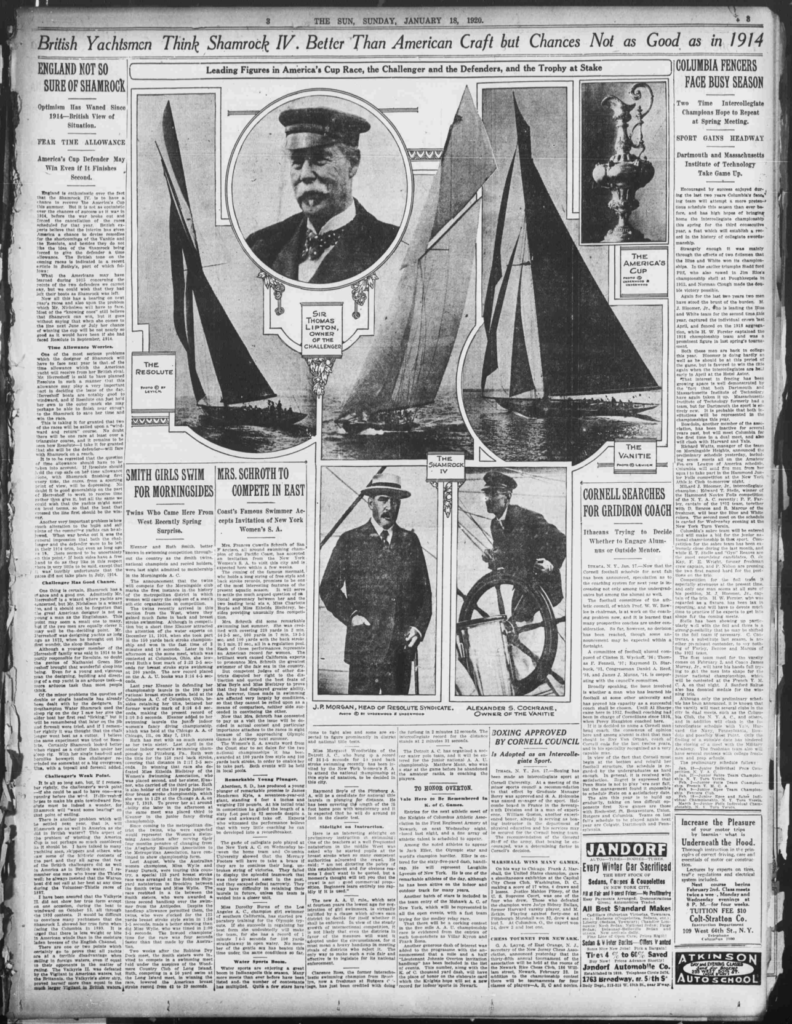
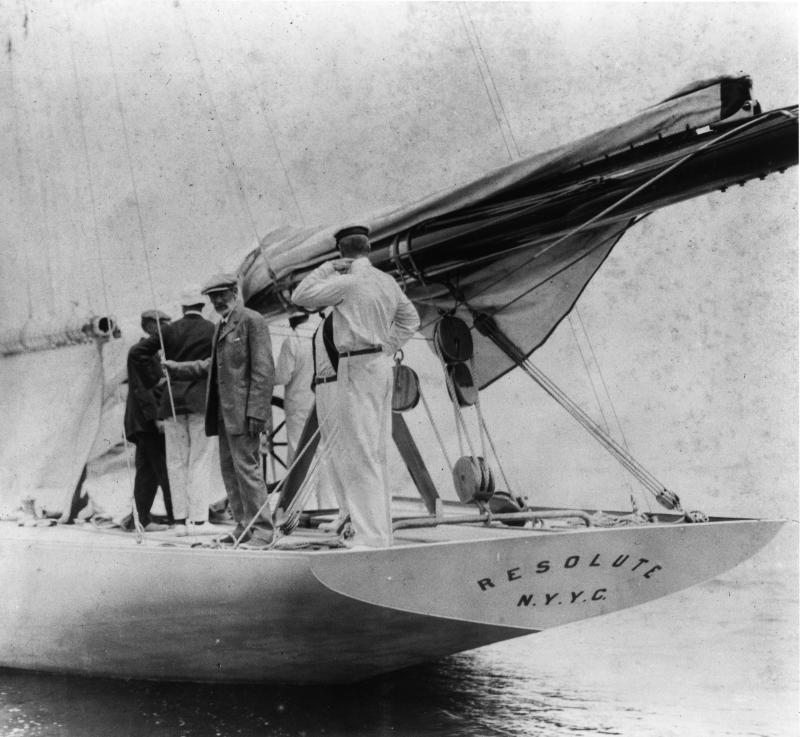
In all seriousness, Lewellyn Howland was an incredibly talented researcher and writer with a true historian's gift for synthesizing a very complex time in yachting history and the specific set of circumstances at HMCo. during this period into an eminently readable (and enjoyable) piece of writing. This essay was intended to be the first of two pieces chronicling the challenging decades of financial struggle and eventual decline at HMCo. that followed J.B.H.'s death in 1915. Part I covers the years between J.B.'s death and the postponement in 1914 of the America's Cup due to the outbreak of WWI, and its eventual conclusion in 1920, and the resulting financial and managerial aftermath for HMCo. leading up to the company's auction and eventual purchase by the Haffenreffer family in 1924. This is a period at HMCo. has not been widely covered in yachting histories but it is a fascinating and complex time shaped by war, a radically changing market and an economy headed for depression. We do not know if Part II was ever completed, but if anyone has a copy in their archive out there, please let us know...
"The Decline and fall of the Herreshoff Manufacturing Company forms one of the strangest chapters in yachting history. It is a story in two distinct parts (of which the following article concerns the first) that begins on the eve of one world war and ends at the close of another. It is a story with few real heroes, no true villains, and a cast of hundreds. It is the story, ultimately, of an extraordinary business enterprise that was condemned to die before its time, then condemned to live after it. Whether Herreshoff Manufacturing Company deserved a longer life or a shorter one is impossible to judge. That the company set and maintained a uniquely high standard of excellence throughout its active years as a builder of yachts and small craft is a matter of eloquent record and triumphant fact...
On December 15, 1916, Herreshoff Manufacturing Company contracted with Alfred I. DuPont of Wilmington, Delaware, to build hull number 306 (in the company's Steam and Power Yachts" construction log), 109 foot lwl. twin-screw coastal patrol boat. Alfred DuPont was a capitalist and sportsman of the type that had been the mainstay of the American yachting establishment - and Herreshoff Manufacturing Company - for decades. Hull number 306 was one of the fast-growing fleet of paramilitary patrol craft being underwritten by private citizens in anticipation of America's eventual entry into the world war. There is nothing in the Herreshoff log to distinguish her from a long and illustrious line of steam launches that had been built under the Herreshoff aegis in years past.
Hull number 306 may have been unremarkable in form and function. In character, however, she was little short of revolutionary. She was the first substantial Herreshoff-built vessel in the history of the company not to have been designed entirely or in large part by a member of the Herreshoff family. While Herreshoff genius showed in the method and quality of her construction, and although she was powered by steam engines of Herreshoff design and manufacture, the lines, profile and principal arrangements for hull number 306 were the work of A. Loring Swasey, aged 38, then head of the Boston design firm of Swasey, Raymond and Page..."
Click here to read the article in full